Non Conventional Instrument Transformers (NCIT) and IEC 61850 compatible products From RHM International
IEC 61850 is an important new international standard for substation automation that will have a very significant impact on how electric power systems are designed and built for many years to come.
IEC 61850 provides a comprehensive model for how power system devices should organize data in a manner that is consistent across all types and brands of devices. This eliminates much of the tedious non-power system configuration effort because the devices can configure themselves.
For instance, if you put a CT/VT input into an IEC 61850 relay, the relay can detect this module and automatically assign it to a measurement unit without user interaction.
How do Non-Conventional Instrument Transformers (NCITs) work in the 61850 substation?
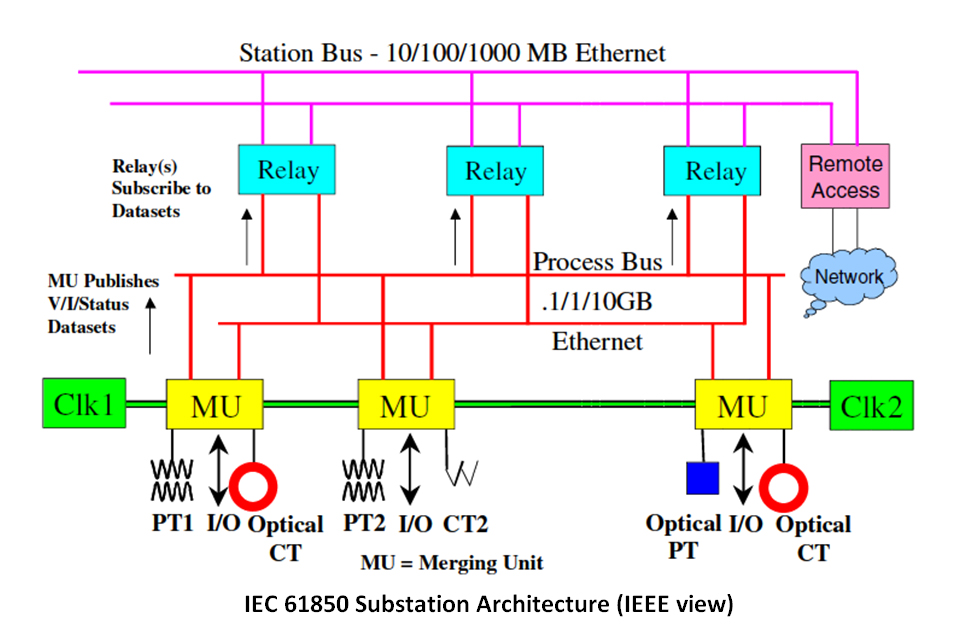
At the “process” layer, data from Optical/Electronic Voltage and Current sensors as well as status information will be collected and digitized by the Merging Units (MUs). MUs could be physically located either in the field or in the control house. Data from the MUs will be collected through fiber optic Ethernet connections. The collection points will be Ethernet switches with internal data buses. In migrating to Process Bus implementations, manufacturers will need to provide the ability to integrate data from existing CTs and PTs with the data from the newer Optical/Electronic sensors (NCITs).
A redundant synchronization clock architecture will also have to be addressed. In this architecture, upon detection of failure of Clock 1, Clock 2 will have to automatically come on line and continue providing sampling synchronization. The following diagram summarizes the architecture:
RHM International’s dry type core insulation technology makes it particularly easy to provide IEC 61850 compatible equipment. Our patented design allows an easy sensing and digitalizing of the signals at the ground level, similar to traditional analog equipment that it may replace.
Monitoring through 61850 compatible sensors.
RHM International’s built-in monitoring systems have been developed to provide an easy interface with the transmission protocols of the IEC 61850 standard. Integration of the monitoring into the overall substation digitalization provides two advantages; a reliable and straightforward analog sensing and a ready to connect digitalized signal.
IEC 61850 Ready RHM International Products
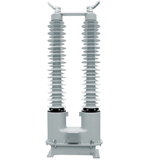
Optical/Electronic Current Transformer
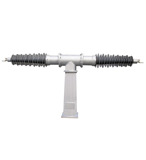
Electronic Combined Voltage and Current Transformer
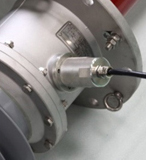
Smart Monitoring
IEC 61850 / NCITs FAQs
What are NCITs?
NCITs, or non-conventional instrument transformers, are measurement devices used in modern substation and smart-grid applications. They can support digital measurement systems by providing current or voltage signals that can be collected, converted, and integrated into digital substation architectures.
What does IEC 61850 ready mean?
IEC 61850 is an international standard for substation automation. When equipment is IEC 61850 ready, it is designed to support the data organization, communication, and integration needs of modern digital substation systems.
How do NCITs support digital substations?
In digital substation systems, signals from optical or electronic voltage and current sensors can be collected and digitized by merging units. These signals can then be transmitted through fiber optic Ethernet connections and integrated into substation automation systems.
How does RHM technology support IEC 61850 applications?
RHM’s dry-type core insulation technology can support IEC 61850-compatible equipment by making it easier to sense and digitize signals at ground level.
Which RHM products are relevant to IEC 61850 or NCIT applications?
RHM has developed a range of IEC 61850-ready products. These include a transformer bushing with integrated low power voltage and current sensing (BIIT™ bushing), an electronic current transformer (eCT) and an electronic combined voltage and current transformer (eVCT). The measurement functions of these devices are based on measurement of the voltage using a capacitor voltage divider and measurement of the current using a Rogowski Coil. An acquisition unit converts the recorded data into a digital serial protocol and transmits them via optical fiber to the Merging Unit (MU) located in the control room. These products support modern measurement, monitoring, and digital substation applications.
